紧急情况:矩阵的维度为零
来源:stackoverflow
2024-02-28 21:18:17
0浏览
收藏
亲爱的编程学习爱好者,如果你点开了这篇文章,说明你对《紧急情况:矩阵的维度为零》很感兴趣。本篇文章就来给大家详细解析一下,主要介绍一下,希望所有认真读完的童鞋们,都有实质性的提高。
问题内容
我运行代码来训练神经网络,并收到警告,矩阵长度为零,我不知道会发生什么,因为我在神经网络的输出变量中使用该零矩阵。
package main

import (
    "errors"
    "fmt"
    "log"
    "math"
    "math/rand"
    "time"

    "gonum.org/v1/gonum/floats"
    "gonum.org/v1/gonum/mat"
)

// sumAlongAxis sums a matrix along a
// particular dimension, preserving the
// other dimension.
func sumAlongAxis(axis int, m *mat.Dense) (*mat.Dense, error) {

    numRows, numCols := m.Dims()

    var output *mat.Dense

    switch axis {
    case 0:
        data := make([]float64, numCols)
        for i := 0; i < numCols; i++ {
            col := mat.Col(nil, i, m)
            data[i] = floats.Sum(col)
        }
        output = mat.NewDense(1, numCols, data)
    case 1:
        data := make([]float64, numRows)
        for i := 0; i < numRows; i++ {
            row := mat.Row(nil, i, m)
            data[i] = floats.Sum(row)
        }
        output = mat.NewDense(numRows, 1, data)
    default:
        return nil, errors.New("invalid axis, must be 0 or 1")
    }

    return output, nil
}

// sigmoid implements the sigmoid function
// for use in activation functions.
func sigmoid(x float64) float64 {
    return 1.0 / (1.0 + math.Exp(-x))
}

// sigmoidPrime implements the derivative
// of the sigmoid function for backpropagation.
func sigmoidPrime(x float64) float64 {
    return x * (1.0 - x)
}

// neuralNet contains all of the information
// that defines a trained neural network.
type neuralNet struct {
    config  neuralNetConfig
    wHidden *mat.Dense
    bHidden *mat.Dense
    wOut    *mat.Dense
    bOut    *mat.Dense
}

// neuralNetConfig defines our neural network
// architecture and learning parameters.
type neuralNetConfig struct {
    inputNeurons  int
    outputNeurons int
    hiddenNeurons int
    numEpochs     int
    learningRate  float64
}

// NewNetwork initializes a new neural network.
func newNetwork(config neuralNetConfig) *neuralNet {
    return &neuralNet{config: config}
}

// Train trains a neural network using backpropagation.
func (nn *neuralNet) train(x, y *mat.Dense) error {
    // Initialize biases/weights.
    randSource := rand.NewSource(time.Now().UnixNano())
    randGen := rand.New(randSource)

    wHiddenRaw := make([]float64, nn.config.hiddenNeurons*nn.config.inputNeurons)
    bHiddenRaw := make([]float64, nn.config.hiddenNeurons)
    wOutRaw := make([]float64, nn.config.outputNeurons*nn.config.hiddenNeurons)
    bOutRaw := make([]float64, nn.config.outputNeurons)

    for _, param := range [][]float64{wHiddenRaw, bHiddenRaw, wOutRaw, bOutRaw} {
        for i := range param {
            param[i] = randGen.Float64()
        }
    }

    wHidden := mat.NewDense(nn.config.inputNeurons, nn.config.hiddenNeurons, wHiddenRaw)
    bHidden := mat.NewDense(1, nn.config.hiddenNeurons, bHiddenRaw)
    wOut := mat.NewDense(nn.config.hiddenNeurons, nn.config.outputNeurons, wOutRaw)
    bOut := mat.NewDense(1, nn.config.outputNeurons, bOutRaw)

    // Define the output of the neural network.
    output := mat.NewDense(0, 0, nil)

    // Loop over the number of epochs utilizing
    // backpropagation to train our model.
    for i := 0; i < nn.config.numEpochs; i++ {

        // Complete the feed forward process.
        hiddenLayerInput := mat.NewDense(0, 0, nil)
        hiddenLayerInput.Mul(x, wHidden)
        addBHidden := func(_, col int, v float64) float64 { return v + bHidden.At(0, col) }
        hiddenLayerInput.Apply(addBHidden, hiddenLayerInput)

        hiddenLayerActivations := mat.NewDense(0, 0, nil)
        applySigmoid := func(_, _ int, v float64) float64 { return sigmoid(v) }
        hiddenLayerActivations.Apply(applySigmoid, hiddenLayerInput)

        outputLayerInput := mat.NewDense(0, 0, nil)
        outputLayerInput.Mul(hiddenLayerActivations, wOut)
        addBOut := func(_, col int, v float64) float64 { return v + bOut.At(0, col) }
        outputLayerInput.Apply(addBOut, outputLayerInput)
        output.Apply(applySigmoid, outputLayerInput)

        // Complete the backpropagation.
        networkError := mat.NewDense(0, 0, nil)
        networkError.Sub(y, output)

        slopeOutputLayer := mat.NewDense(0, 0, nil)
        applySigmoidPrime := func(_, _ int, v float64) float64 { return sigmoidPrime(v) }
        slopeOutputLayer.Apply(applySigmoidPrime, output)
        slopeHiddenLayer := mat.NewDense(0, 0, nil)
        slopeHiddenLayer.Apply(applySigmoidPrime, hiddenLayerActivations)

        dOutput := mat.NewDense(0, 0, nil)
        dOutput.MulElem(networkError, slopeOutputLayer)
        errorAtHiddenLayer := mat.NewDense(0, 0, nil)
        errorAtHiddenLayer.Mul(dOutput, wOut.T())

        dHiddenLayer := mat.NewDense(0, 0, nil)
        dHiddenLayer.MulElem(errorAtHiddenLayer, slopeHiddenLayer)

        // Adjust the parameters.
        wOutAdj := mat.NewDense(0, 0, nil)
        wOutAdj.Mul(hiddenLayerActivations.T(), dOutput)
        wOutAdj.Scale(nn.config.learningRate, wOutAdj)
        wOut.Add(wOut, wOutAdj)

        bOutAdj, err := sumAlongAxis(0, dOutput)
        if err != nil {
            return err
        }
        bOutAdj.Scale(nn.config.learningRate, bOutAdj)
        bOut.Add(bOut, bOutAdj)

        wHiddenAdj := mat.NewDense(0, 0, nil)
        wHiddenAdj.Mul(x.T(), dHiddenLayer)
        wHiddenAdj.Scale(nn.config.learningRate, wHiddenAdj)
        wHidden.Add(wHidden, wHiddenAdj)

        bHiddenAdj, err := sumAlongAxis(0, dHiddenLayer)
        if err != nil {
            return err
        }
        bHiddenAdj.Scale(nn.config.learningRate, bHiddenAdj)
        bHidden.Add(bHidden, bHiddenAdj)
    }

    nn.wHidden = wHidden
    nn.bHidden = bHidden
    nn.wOut = wOut
    nn.bOut = bOut

    return nil

}

func main() {
    // Define our input attributes.
    input := mat.NewDense(3, 4, []float64{
        1.0, 0.0, 1.0, 0.0,
        1.0, 0.0, 1.0, 1.0,
        0.0, 1.0, 0.0, 1.0,
    })

    // Define our labels.
    labels := mat.NewDense(3, 1, []float64{1.0, 1.0, 0.0})

    // Define our network architecture and
    // learning parameters.
    config := neuralNetConfig{
        inputNeurons:  4,
        outputNeurons: 1,
        hiddenNeurons: 3,
        numEpochs:     5000,
        learningRate:  0.3,
    }

    // Train the neural network.
    network := newNetwork(config)
    if err := network.train(input, labels); err != nil {
        log.Fatal(err)
    }

    // Output the weights that define our network!
    f := mat.Formatted(network.wHidden, mat.Prefix(" "))
    fmt.Printf("\nwHidden = % v\n\n", f)

    f = mat.Formatted(network.bHidden, mat.Prefix(" "))
    fmt.Printf("\nbHidden = % v\n\n", f)

    f = mat.Formatted(network.wOut, mat.Prefix(" "))
    fmt.Printf("\nwOut = % v\n\n", f)

    f = mat.Formatted(network.bOut, mat.Prefix(" "))
    fmt.Printf("\nbOut = % v\n\n", f)
}
正确答案
来自 mat 软件包的 documentation:
因此,当您使用 r 和 c 零调用 mat.NewDense(0, 0, nil) 时,正如您在上面的源代码中多次执行的那样,代码会出现恐慌,正如其文档所述。没有什么意外。
终于介绍完啦!小伙伴们,这篇关于《紧急情况:矩阵的维度为零》的介绍应该让你收获多多了吧!欢迎大家收藏或分享给更多需要学习的朋友吧~golang学习网公众号也会发布Golang相关知识,快来关注吧!
版本声明
本文转载于:stackoverflow 如有侵犯,请联系study_golang@163.com删除
 设置 *tls.Conn 的 Keep-Alive 周期
- 上一篇
- 设置 *tls.Conn 的 Keep-Alive 周期

- 下一篇
- 失败:在 Windows 10 上使用 Robotgo 进行桌面自动化构建出现问题
查看更多
最新文章
-
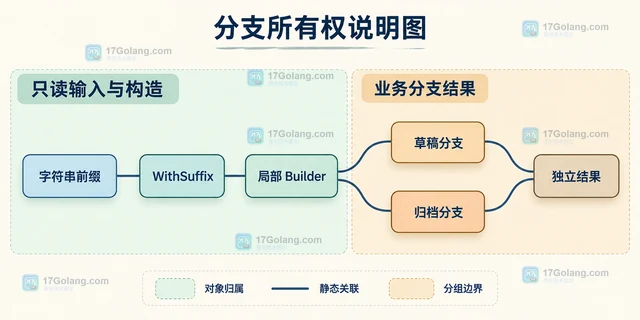
- Golang · Go问答 | 27分钟前 | Go panic 字符串 strings.Builder 值复制
- Go Builder 为什么复制后出现异常
- 149浏览 收藏
-
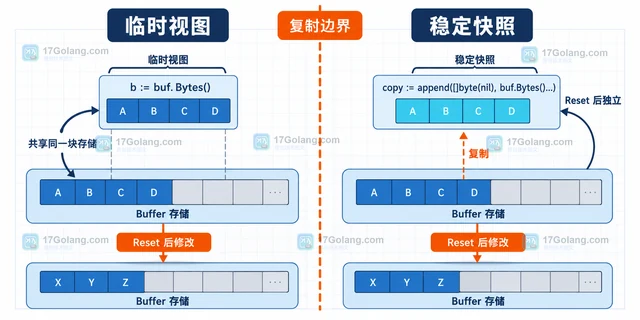
- Golang · Go问答 | 28分钟前 |
- Go Buffer.Bytes 为什么返回数据会变化
- 457浏览 收藏
-

- Golang · Go问答 | 30分钟前 |
- Go regexp 为什么中文匹配为空
- 496浏览 收藏
-
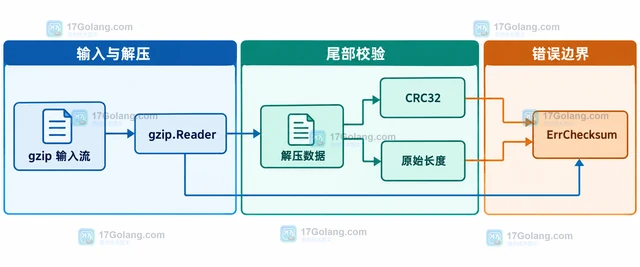
- Golang · Go问答 | 33分钟前 | go · 故障排查 · Go gzip 压缩解压 ErrChecksum
- Go gzip 为什么解压出现校验错误
- 321浏览 收藏
-
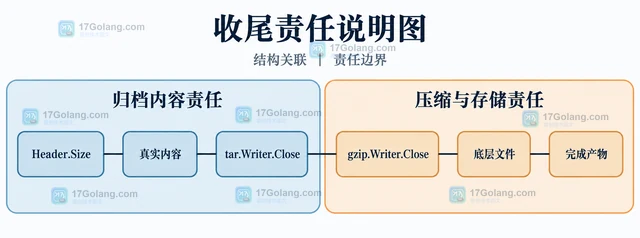
- Golang · Go问答 | 37分钟前 | Go 截断 归档 tar unexpected EOF
- Go tar 为什么读取时报 unexpected EOF
- 372浏览 收藏
-
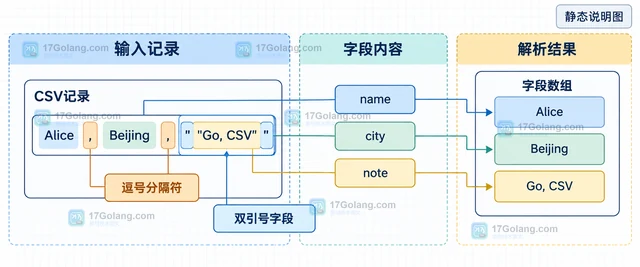
- Golang · Go问答 | 39分钟前 |
- Go CSV 为什么逗号字段错位
- 109浏览 收藏
-

- Golang · Go问答 | 42分钟前 |
- Go tls.Config VerifyConnection 的握手校验观测与返回策略
- 167浏览 收藏
-
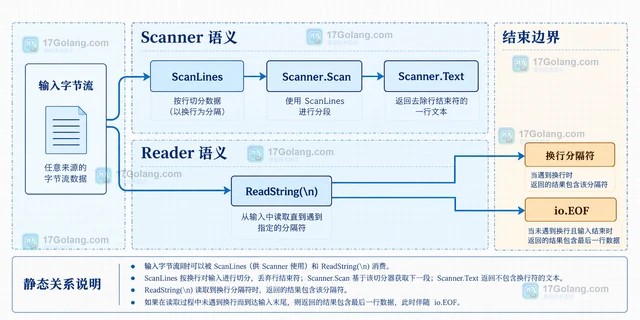
- Golang · Go问答 | 42分钟前 |
- Go Reader 为什么最后一行没有换行
- 264浏览 收藏
-

- Golang · Go问答 | 1小时前 |
- Go io.Copy 为什么复制后长度不一致
- 393浏览 收藏
查看更多
课程推荐
-

- 前端进阶之JavaScript设计模式
- 设计模式是开发人员在软件开发过程中面临一般问题时的解决方案,代表了最佳的实践。本课程的主打内容包括JS常见设计模式以及具体应用场景,打造一站式知识长龙服务,适合有JS基础的同学学习。
- 543次学习
-

- GO语言核心编程课程
- 本课程采用真实案例,全面具体可落地,从理论到实践,一步一步将GO核心编程技术、编程思想、底层实现融会贯通,使学习者贴近时代脉搏,做IT互联网时代的弄潮儿。
- 516次学习
-

- 简单聊聊mysql8与网络通信
- 如有问题加微信:Le-studyg;在课程中,我们将首先介绍MySQL8的新特性,包括性能优化、安全增强、新数据类型等,帮助学生快速熟悉MySQL8的最新功能。接着,我们将深入解析MySQL的网络通信机制,包括协议、连接管理、数据传输等,让
- 500次学习
-

- JavaScript正则表达式基础与实战
- 在任何一门编程语言中,正则表达式,都是一项重要的知识,它提供了高效的字符串匹配与捕获机制,可以极大的简化程序设计。
- 487次学习
-

- 从零制作响应式网站—Grid布局
- 本系列教程将展示从零制作一个假想的网络科技公司官网,分为导航,轮播,关于我们,成功案例,服务流程,团队介绍,数据部分,公司动态,底部信息等内容区块。网站整体采用CSSGrid布局,支持响应式,有流畅过渡和展现动画。
- 485次学习
查看更多
AI推荐
-
- PubMedQA
- 深入了解PubMedQA生物医学问答数据集,涵盖其核心功能、使用方法及在临床决策、药物研发等场景的应用,助力提升NLP模型性能。
- 582次使用
-
- H2O EvalGPT
- H2O EvalGPT是H2O.ai推出的开源LLM评估平台,提供详细的大模型性能排行榜、行业特定基准测试及A/B测试功能,助您快速选择最适合项目的高性能大语言模型。
- 620次使用
-

- LMArena
- LMArena是加州大学伯克利分校推出的AI模型匿名评测平台。通过盲测投票机制,用户可对比不同大模型回答并生成实时排行榜,助力开发者优化模型及用户选择最佳AI工具。
- 654次使用
-
- HELM
- 深入了解斯坦福推出的HELM(Holistic Evaluation of Language Models)大模型评测体系。本文解析其核心功能、安装配置步骤及应用场景,涵盖准确性、公平性、鲁棒性等多维度指标,助力开发者全面优化语言模型性能。
- 620次使用
-

- MMBench
- MMBench是由上海人工智能实验室等机构联合推出的多模态基准测试平台,提供细粒度能力评估、大规模数据集及VLMEvalKit工具。本文详细介绍其核心功能、安装使用方法及应用场景,助力开发者全面评估多模态模型性能。
- 435次使用
查看更多
相关文章
-
- 用Nginx反向代理部署go写的网站。
- 2023-01-17 502浏览
-
- GoLand调式动态执行代码
- 2023-01-13 502浏览
-
- Go JSONJSON null 解码到指针后状态不符合预期怎么办
- 2026-10-18 501浏览
-
- Go crypto/rand.Text 的长度为什么不是固定字符数
- 2026-10-04 501浏览
-
- Go strings.ToValidUTF8 清洗日志内容的边界
- 2026-10-03 501浏览